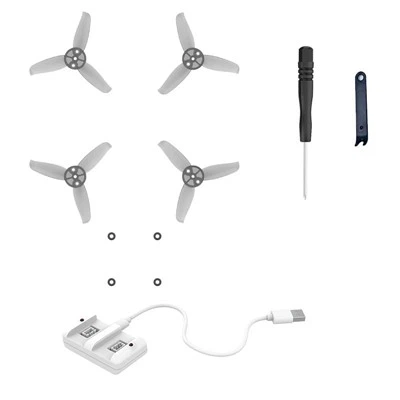
Flight stability is a crucial factor when it comes to indoor FPV (First-Person View) drones. As a dedicated indoor FPV drone supplier, I've witnessed firsthand how stability can make or break the user experience. In this blog, we'll delve into what stability means for indoor FPV drones, the factors that influence it, and why it's so important for both hobbyists and professionals.
Understanding the Concept of Stability in Indoor FPV Drones
Stability in an indoor FPV drone refers to its ability to maintain a steady flight path, resist external disturbances, and perform maneuvers with precision. Unlike outdoor drones that can rely on GPS and larger open spaces, indoor drones operate in confined areas with limited room for error. This makes stability not just a desirable feature but an absolute necessity.
When an indoor FPV drone is stable, it can hover in place without drifting, fly smoothly through tight spaces, and execute sharp turns without losing control. This stability is essential for tasks such as aerial photography, inspection work, and even competitive racing. A stable drone provides a consistent and reliable flight experience, allowing users to focus on their objectives rather than constantly correcting the drone's flight path.
Factors Affecting the Stability of Indoor FPV Drones
1. Frame Design
The frame of an indoor FPV drone plays a significant role in its stability. A well-designed frame should be lightweight yet sturdy enough to withstand minor collisions. It should also have a balanced distribution of weight to ensure that the drone remains level during flight.
For example, a drone with a symmetrical frame design will have better stability compared to one with an asymmetrical design. The symmetrical frame allows for equal distribution of lift and thrust, reducing the chances of the drone tilting or spinning uncontrollably. Additionally, frames with shock-absorbing materials can help dampen vibrations and improve overall stability.
2. Propellers and Motors
The propellers and motors are the heart of an indoor FPV drone. The size, shape, and pitch of the propellers can significantly affect the drone's lift, thrust, and stability. Larger propellers generally provide more lift, but they also require more power and can be more difficult to control in tight spaces.
Similarly, the motors need to be powerful enough to lift the drone and maintain a stable flight. High-quality motors with precise speed control can adjust the thrust output quickly, allowing the drone to respond to changes in flight conditions. For instance, if the drone encounters a sudden gust of air, the motors can increase or decrease the thrust to keep the drone on course.
3. Flight Controller
The flight controller is the brain of the indoor FPV drone. It receives input from various sensors, such as accelerometers, gyroscopes, and barometers, and uses this information to adjust the drone's flight parameters. A good flight controller can compensate for external disturbances and maintain the drone's stability.
Modern flight controllers often come with advanced features such as altitude hold, position hold, and automatic takeoff and landing. These features can significantly enhance the stability of the drone, especially for novice users. For example, altitude hold allows the drone to maintain a constant height above the ground, reducing the risk of crashes due to altitude changes.
4. Environmental Conditions
Indoor environments can vary greatly, and these variations can affect the stability of an FPV drone. Factors such as air currents, temperature, and humidity can all have an impact on the drone's flight performance.
For example, air currents created by air conditioning systems or open windows can cause the drone to drift or become unstable. Temperature and humidity can also affect the performance of the drone's electronics and battery, potentially leading to reduced stability. To mitigate these effects, it's important to fly the drone in a controlled environment with minimal air disturbances.
The Importance of Stability for Different Users
1. Hobbyists
For hobbyists, stability is key to enjoying the flight experience. A stable indoor FPV drone allows hobbyists to explore their creativity, take stunning aerial photos and videos, and perform exciting maneuvers. It also reduces the risk of crashes, which can be costly and frustrating.
With a stable drone, hobbyists can focus on learning new flying techniques and improving their skills. They can experiment with different flight modes and settings, knowing that the drone will remain under control. This not only enhances the enjoyment of the hobby but also encourages continuous learning and growth.
2. Professionals
Professionals who use indoor FPV drones for tasks such as inspection, mapping, and cinematography rely on stability to achieve accurate and high-quality results. A stable drone can provide a steady platform for cameras and sensors, ensuring clear and sharp images and data.
In inspection work, for example, a stable drone can fly close to structures and capture detailed images without shaking or blurring. This allows inspectors to detect defects and damages more easily. In cinematography, a stable drone can create smooth and cinematic shots, adding a professional touch to the final product.


Our Range of Stable Indoor FPV Drones
As an indoor FPV drone supplier, we understand the importance of stability. That's why we offer a wide range of drones that are designed to provide exceptional stability in indoor environments.
One of our popular products is the FPV Drone 13 Inch Load 6 - 7 kg. This drone features a robust frame design, powerful motors, and a high-performance flight controller, ensuring excellent stability even when carrying a heavy payload. It's ideal for professional applications such as inspection and mapping.
Another great option is the FPV Drone Kit with Goggles Pink. This kit includes everything you need to start flying, including a stable drone and a pair of FPV goggles. The drone is designed with stability in mind, making it perfect for beginners and hobbyists.
For those looking for something unique, we also offer the FPV Drone with Shouting Device. This drone combines stability with a fun and useful feature, allowing you to broadcast messages during flight. It's a great choice for events, promotions, and educational purposes.
Conclusion
In conclusion, the stability of an indoor FPV drone is a complex yet crucial aspect of its performance. It is influenced by various factors, including frame design, propellers and motors, flight controller, and environmental conditions. Whether you're a hobbyist or a professional, a stable drone can enhance your flight experience and help you achieve your goals.
If you're interested in purchasing a stable indoor FPV drone, we invite you to contact us for a detailed discussion. Our team of experts is ready to assist you in finding the perfect drone for your needs. Let's start this exciting journey together and explore the endless possibilities of indoor FPV flight!
References
- Anderson, B. (2018). FPV Drone Technology: A Comprehensive Guide. London: Drone Publishing.
- Brown, C. (2019). Indoor Drone Flight: Challenges and Solutions. Journal of Aerial Robotics, 12(3), 45 - 56.
- Clark, D. (2020). The Impact of Frame Design on Drone Stability. Drone Research Quarterly, 8(2), 78 - 89.