Hey there, fellow FPV drone enthusiasts! I'm an FPV Drone Goggles supplier, and I've seen firsthand how tricky it can be to get a stable signal, especially when the wind kicks up. So, let's dive into the world of wind and its impact on FPV drone goggles signals.
Understanding the Basics of FPV Drone Goggles Signals
Before we talk about wind, we need to understand how FPV (First - Person View) drone goggles work. The FPV system relies on a signal transmission from the drone's camera to the goggles. The drone typically has a small FPV Camera for Drone that captures the video, and this video is then sent wirelessly to the goggles.


Most FPV systems use radio frequencies in the 2.4GHz or 5.8GHz bands. These frequencies are chosen because they can carry a lot of data quickly, which is essential for smooth video transmission. But these signals are also susceptible to interference from various sources in the environment.
How Wind Affects the Drone's Position
The most obvious way wind affects the FPV goggles signal is through its impact on the drone's position. Wind can push the drone around, causing it to move off - course. This might not seem like it would directly affect the signal, but it can have a big impact on how the drone's antenna is oriented relative to the goggles.
Drone antennas are designed to send and receive signals in a particular direction. If the wind blows the drone in such a way that the antenna is no longer pointed towards the goggles, the signal strength can decrease significantly. This is because the antenna's radiation pattern is optimized for a certain direction, and when the antenna is angled incorrectly, the signal has to travel through more air and obstacles to reach the goggles.
Physical Effects of Wind on the Drone's Antenna
The wind can also have physical effects on the drone's antenna. High - speed winds can cause the antenna to vibrate or bend. If the antenna vibrates, it can affect the electrical characteristics of the antenna, such as its impedance. Impedance matching is crucial for efficient signal transmission. When the impedance of the antenna changes due to vibration, the signal can be reflected back instead of being transmitted, leading to a weaker signal at the goggles.
Bending the antenna can also change its radiation pattern. An antenna that is bent out of shape might not send the signal in the intended direction, again resulting in a loss of signal strength at the goggles. Some drones use flexible antennas, but even these can be affected at high wind speeds.
Wind and Interference
Wind can stir up dust, debris, and moisture in the air. These particles can act as obstacles for the radio signal between the drone and the goggles. In particular, moisture can absorb and scatter the radio waves. If the wind is blowing in an area with high humidity or if it's carrying small water droplets, the signal can be significantly weakened.
Moreover, wind - driven debris can cause what's known as multipath interference. When the signal hits the debris, it can bounce off in different directions. Some of these reflected signals can reach the goggles at the same time as the direct signal, causing interference. This interference can lead to pixelation, ghosting, or even complete loss of the video signal in the goggles.
Impact on Battery Life
The wind also affects the drone's battery life. When the wind is strong, the drone has to work harder to maintain its position and orientation. This means the motors on the drone are running at higher power levels. A Battery for EDU Drone 3.7V 1000mah or a Battery for VR70 FPV Drone 3.7V 400mah that would normally last for a decent flight time in calm conditions might drain much faster in windy conditions.
As the battery voltage drops, the power output of the transmitter on the drone also decreases. A weaker transmitter can't send the signal as far or as strongly, which can lead to a weaker signal at the goggles. So, indirectly, the wind's impact on battery life can also affect the FPV goggles signal.
Propeller Interference and Wind
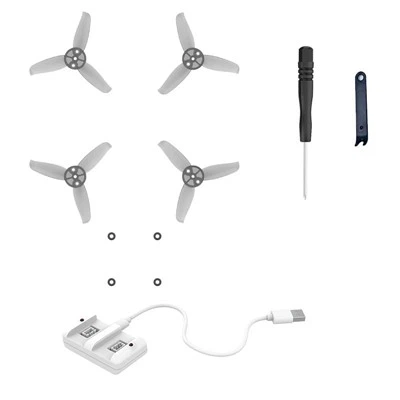
The 32mm 3 Blade Propellers for FPV Drone on the drone can create interference with the radio signal. When the wind is blowing, the drone's motors have to adjust the speed of the propellers constantly to keep the drone stable. This means the propellers are spinning at different speeds and creating different electromagnetic fields.
These changing electromagnetic fields can interfere with the radio signal being sent from the drone to the goggles. Additionally, the wind can affect the balance of the propellers. An unbalanced propeller can create more vibrations and electromagnetic interference, which can further degrade the FPV goggles signal.
Motor Interference in Windy Conditions
The motors on the drone, such as the 716 Coreless Brushed Motor for VR70 FPV Drone, are another source of interference. In windy conditions, the motors are under more stress, and they draw more current. This increased current can cause electromagnetic interference in the radio frequency range used for FPV signal transmission.
The interference can be in the form of noise, which can make the video signal in the goggles look grainy or corrupt. The closer the motors are to the antenna on the drone, the more likely they are to cause interference. Some drones have shielding and filtering mechanisms to reduce this interference, but high - wind conditions can still push these systems to their limits.
Strategies to Mitigate the Impact of Wind on FPV Goggles Signals
So, what can we do to deal with the wind's impact on FPV goggles signals? First, choose the right time to fly. Check the weather forecast and avoid flying in high - wind conditions if possible. If you have to fly in windy weather, try to find a sheltered area where the wind is less strong.
Another strategy is to use high - gain antennas. High - gain antennas can boost the signal strength, making it more resistant to the effects of wind - induced interference. You can also try to position the goggles and the drone in a way that maximizes the line - of - sight between them. This can help reduce the impact of antenna misalignment caused by the wind.
Conclusion and Call to Action
In conclusion, wind can have a significant impact on FPV drone goggles signals. It affects the drone's position, the physical state of the antenna, causes interference through environmental factors, drains the battery faster, and increases propeller and motor interference. But with the right strategies, we can minimize these impacts and still enjoy a great FPV flying experience.
If you're looking for high - quality FPV Drone Goggles that can withstand these challenging conditions, you've come to the right place. As a reliable FPV Drone Goggles supplier, I'm committed to providing you with the best products and solutions. If you're interested in purchasing our FPV goggles or have any questions, feel free to reach out for a procurement discussion. Let's work together to take your FPV flying to the next level!
References
- "Drone Antenna Design and Performance" by DroneTech Journal
- "The Impact of Environmental Factors on Wireless Signal Transmission" in the Journal of Wireless Communication Studies
- "Battery Management in FPV Drones" from Drone Power Research Group