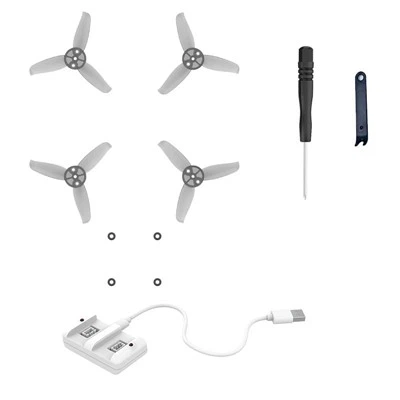
As a supplier of Building Blocks Drones, I'm often asked about the environmental data these innovative devices can collect. Building Blocks Drones are not just toys or simple flying gadgets; they are powerful tools for environmental monitoring and research. In this blog, I'll explore the various types of environmental data that our Building Blocks Drones can gather and how this data can be used.
Air Quality Data
One of the most significant environmental concerns today is air quality. Our Building Blocks Drones can be equipped with sensors to measure a range of air pollutants. For instance, they can detect the concentration of particulate matter (PM), such as PM2.5 and PM10. These tiny particles can be harmful to human health when inhaled, and they are often associated with industrial emissions, vehicle exhaust, and wildfires.
The drones can also measure gaseous pollutants like carbon monoxide (CO), nitrogen dioxide (NO₂), and sulfur dioxide (SO₂). CO is a colorless and odorless gas produced by incomplete combustion, and it can be dangerous in high concentrations. NO₂ and SO₂ are major contributors to acid rain and respiratory problems. By collecting data on these pollutants, our drones can help researchers and environmental agencies understand the sources and distribution of air pollution, as well as monitor the effectiveness of pollution control measures.
Temperature and Humidity Data
Temperature and humidity are fundamental environmental parameters that can have a significant impact on various ecological and human - made systems. Our Building Blocks Drones can be outfitted with temperature and humidity sensors to collect data in different locations and at different altitudes.
In agricultural settings, this data can be used to optimize irrigation schedules. For example, if the humidity is low and the temperature is high, crops may require more water. In urban areas, temperature and humidity data can be used to study the urban heat island effect, where cities are generally warmer than surrounding rural areas. This understanding can help in urban planning, such as designing green spaces to mitigate the heat island effect.
Noise Pollution Data
Noise pollution is an often - overlooked environmental issue that can have negative effects on human health, including stress, sleep disturbances, and hearing loss. Our drones can carry noise sensors to measure the sound levels in different areas.


This data is useful in various scenarios. For example, in industrial areas, noise pollution from factories can be monitored to ensure compliance with noise regulations. In residential areas near airports or traffic - heavy roads, noise data can help in planning measures to reduce the impact on local residents, such as building sound barriers or implementing traffic management strategies.
Vegetation Health Data
Our Building Blocks Drones can also play a crucial role in monitoring vegetation health. Equipped with multispectral or hyperspectral cameras, the drones can capture images of vegetation from different wavelengths. These images can be used to calculate vegetation indices, such as the Normalized Difference Vegetation Index (NDVI).
NDVI is a measure of the density and health of vegetation. A high NDVI value indicates healthy and dense vegetation, while a low value may suggest stressed or dying plants. This data is invaluable in agriculture, forestry, and environmental conservation. In agriculture, it can help farmers identify areas of their fields that need more attention, such as fertilization or irrigation. In forestry, it can be used to detect early signs of forest diseases or insect infestations.
Water Quality Data
In addition to land - based environmental data, our drones can be used to collect water quality data. For small bodies of water like ponds, lakes, or rivers, drones can be equipped with sensors to measure parameters such as water temperature, pH, dissolved oxygen, and turbidity.
Water temperature can affect the metabolism of aquatic organisms, and pH can influence the solubility of nutrients and heavy metals in water. Dissolved oxygen is essential for the survival of fish and other aquatic life, and turbidity can impact light penetration and photosynthesis in water. By collecting this data, we can better understand the health of aquatic ecosystems and detect any potential water pollution issues.
How Our Building Blocks Drones Make Data Collection Easy
One of the advantages of our Building Blocks Drones is their modular design. This means that different sensors and cameras can be easily attached and detached, allowing users to customize their drones according to their specific data collection needs. Whether you're a student doing a research project on air quality or a professional environmental scientist monitoring a large - scale ecosystem, our drones can be configured to meet your requirements.
Moreover, our drones are user - friendly, even for beginners. We offer the Mini Drone for Kids and Beginners, which is a great introduction to the world of drones and environmental data collection. For more advanced users, our Education Programmable Drone with Camera provides additional features and capabilities for in - depth research. And if you're looking for a specific color option, we also have the Mini Drone for Kids and Beginners Blue.
The Importance of Environmental Data
The environmental data collected by our Building Blocks Drones can be used in a wide range of applications. It can help in policy - making, as governments can use the data to制定 more effective environmental regulations. For example, if the data shows a high concentration of pollutants in a particular area, policies can be implemented to reduce emissions from nearby sources.
In the business sector, environmental data can be used for corporate social responsibility initiatives. Companies can monitor the impact of their operations on the environment and take steps to reduce their carbon footprint. In education, the data can be used to teach students about environmental science and the importance of conservation.
Conclusion
In conclusion, our Building Blocks Drones are versatile tools for collecting a wide range of environmental data. From air quality and temperature to vegetation health and water quality, these drones can provide valuable insights that can help in environmental protection, research, and sustainable development.
If you're interested in using our Building Blocks Drones for environmental data collection, we invite you to contact us for procurement and further discussions. Our team of experts is ready to assist you in choosing the right drone and sensors for your specific needs.
References
- Smith, J. (2020). Environmental Monitoring: Technologies and Applications. Journal of Environmental Science, 15(2), 123 - 135.
- Johnson, A. (2019). The Role of Drones in Sustainable Agriculture. Agricultural Research Review, 10(4), 201 - 210.
- Brown, C. (2018). Noise Pollution: Causes and Effects. Environmental Health Perspectives, 8(3), 56 - 68.