As a drone soccer supplier, I've witnessed firsthand the unique blend of innovation and excitement that drone soccer brings to the sports world. In this blog, I'll delve into the differences between drone soccer and traditional soccer, exploring various aspects such as the game setup, equipment, rules, and the overall experience.
Game Setup
Traditional soccer is played on a large, grassy field called a pitch. The pitch is rectangular, with specific dimensions regulated by FIFA. It typically measures between 100 - 130 yards in length and 50 - 100 yards in width. The field is marked with lines to define the boundaries, the center circle, the penalty areas, and the goal areas. Goals are placed at each end of the field, and the game is played with two teams of 11 players each.
On the other hand, drone soccer is played in an indoor arena. The arena is usually a large, enclosed space with a net or barrier around the perimeter to prevent the drones from flying out. The size of the arena can vary, but it is generally much smaller than a traditional soccer pitch. The goals in drone soccer are also smaller and are typically placed at each end of the arena. Instead of players, each team has a set of drones that are controlled by pilots from the sidelines.
Equipment
In traditional soccer, the primary equipment is the ball, which is spherical and made of leather or synthetic materials. Players also wear jerseys, shorts, socks, cleats, and shin guards for protection. Goalkeepers have additional equipment, such as gloves and specialized jerseys.
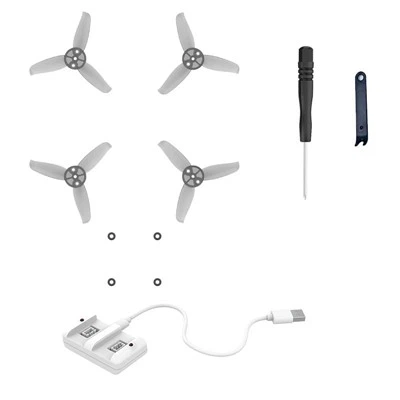
In drone soccer, the key equipment is the drones themselves. These drones are specifically designed for the sport and are equipped with protective frames to prevent damage during collisions. For example, our Drone Soccer Frame 200mm provides excellent protection for the drone's components. The drones are powered by batteries and are controlled using remote controllers. The ball in drone soccer is usually a lightweight, inflatable object that can be easily carried and maneuvered by the drones. Additionally, drones often use 2.5 Inch Propeller for Drone Soccer for better performance. For competition training, our Brushed Soccer Drone for Competition Training is a popular choice among teams.
Rules
The rules of traditional soccer are well - established and governed by FIFA. The objective of the game is to score more goals than the opposing team by kicking the ball into the opponent's goal. Players are not allowed to use their hands (except for the goalkeeper within the penalty area), and there are strict rules regarding fouls, offside, and throw - ins. Referees enforce these rules during the game, and penalties can range from free kicks to yellow and red cards.


In drone soccer, the rules are still evolving but share some similarities with traditional soccer. The goal is also to score more goals than the opposing team. However, since drones are used instead of players, there are different rules regarding collisions, flying out of bounds, and interference. For example, if a drone collides with another drone in an unsportsmanlike manner, it may result in a penalty. The game is usually divided into periods, and there are specific rules for starting and restarting the game after a goal or a stoppage.
Physical Demands
Traditional soccer is a highly physical sport that requires a high level of fitness, endurance, and agility. Players need to run, jump, kick, and tackle throughout the game, which can be physically exhausting. They also need to have good ball control skills and be able to make split - second decisions in a fast - paced environment.
Drone soccer, on the other hand, places less physical demand on the participants. The pilots controlling the drones do not need to run or perform physical maneuvers on the field. However, they do need to have good hand - eye coordination, quick reflexes, and strategic thinking skills. Pilots need to be able to control their drones precisely, anticipate the movements of the opposing drones, and make decisions on when to attack or defend.
Spectator Experience
Traditional soccer has a massive global following, and matches are often played in large stadiums filled with thousands of passionate fans. The atmosphere in a soccer stadium is electric, with fans cheering, singing, and chanting throughout the game. The live experience of watching a traditional soccer match is a unique and exciting event, with the action taking place on a large, open field.
Drone soccer offers a different spectator experience. Since it is usually played in an indoor arena, the spectators are closer to the action. The fast - paced nature of the game, with the drones flying around at high speeds, creates a thrilling visual spectacle. Additionally, the use of technology, such as LED lights on the drones, can enhance the visual appeal of the game. Spectators can also watch the pilots' reactions and strategies as they control the drones from the sidelines.
Skill Development
In traditional soccer, players develop a wide range of skills, including ball control skills such as dribbling, passing, and shooting. They also learn teamwork, communication, and leadership skills as they work together with their teammates to achieve a common goal. Physical skills such as running, jumping, and tackling are also crucial for success in traditional soccer.
In drone soccer, pilots need to develop skills in drone control, such as flying the drone smoothly, making quick turns, and maintaining altitude. They also need to learn strategic skills, such as positioning their drones effectively, coordinating with their teammates, and anticipating the moves of the opposing team. Additionally, since drone technology is constantly evolving, pilots need to stay updated on the latest advancements in drone design and performance.
Accessibility
Traditional soccer has a long - standing history and is widely accessible around the world. All you need is a ball and a patch of grass to start playing. There are numerous local leagues, schools, and community organizations that offer opportunities for people of all ages and skill levels to participate in the sport.
Drone soccer, while growing in popularity, is still relatively new and may not be as accessible in some areas. It requires specialized equipment, such as drones and remote controllers, which can be expensive. Additionally, finding a suitable indoor arena to play in can be a challenge. However, as the sport continues to develop, efforts are being made to make it more accessible, such as through the development of more affordable drones and the establishment of more drone soccer facilities.
Safety
In traditional soccer, there are risks of physical injuries such as sprains, strains, and fractures. Collisions between players, especially during tackles, can result in serious injuries. To mitigate these risks, players wear protective equipment such as shin guards and helmets (in some cases). Referees also enforce rules to prevent dangerous play.
In drone soccer, the main safety concern is the risk of the drones crashing into each other or into the spectators. To address this, drones are equipped with protective frames, and the arena is designed with safety barriers. Pilots are also required to follow strict safety protocols, such as keeping a safe distance from other drones and ensuring that their drones are in good working condition before each game.
Conclusion
In conclusion, while both drone soccer and traditional soccer share the common goal of scoring goals and competing against an opposing team, they have significant differences in terms of game setup, equipment, rules, physical demands, spectator experience, skill development, accessibility, and safety. Drone soccer offers a unique and innovative alternative to traditional soccer, combining the excitement of sports with the latest in drone technology.
If you're interested in exploring the world of drone soccer, whether you're a team looking for high - quality equipment or an individual wanting to start your own drone soccer journey, I encourage you to get in touch. We offer a wide range of products, including the Drone Soccer Frame 200mm, Brushed Soccer Drone for Competition Training, and 2.5 Inch Propeller for Drone Soccer, to meet your needs. Contact us to discuss your requirements and start your drone soccer adventure today.
References
- FIFA Official Rules of the Game of Football
- Various research papers on the development and rules of drone soccer
- Interviews with professional traditional soccer players and drone soccer pilots