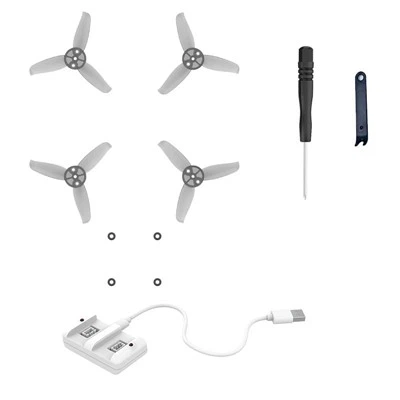
In recent years, education drones have emerged as a revolutionary tool in the field of education, offering students hands - on experience in STEM (Science, Technology, Engineering, and Mathematics) subjects. As an education drone supplier, I've witnessed firsthand the growing popularity of these devices in classrooms around the world. However, with the increasing focus on environmental sustainability, a crucial question arises: Are education drones eco - friendly?
The Environmental Impact of Drone Manufacturing
The production of education drones, like any electronic device, has an environmental footprint. The extraction of raw materials such as lithium for batteries, rare - earth metals for electronic components, and plastics for the drone's body can lead to significant environmental degradation. Mining operations often cause deforestation, soil erosion, and water pollution. For instance, the extraction of lithium, a key component in drone batteries, can deplete water resources in arid regions where lithium deposits are commonly found.
Moreover, the manufacturing process itself consumes a large amount of energy. Factories need to power machinery, heat and cool production areas, and transport raw materials and finished products. This energy consumption usually relies on fossil fuels, contributing to greenhouse gas emissions. However, many drone manufacturers, including those I work with, are taking steps to mitigate these impacts.
Some companies are investing in research and development to find more sustainable materials. For example, biodegradable plastics are being explored as an alternative to traditional plastics. These biodegradable plastics can break down naturally over time, reducing the amount of plastic waste in landfills. Additionally, efforts are being made to improve the energy efficiency of manufacturing processes, such as using renewable energy sources like solar and wind power in factories.
Energy Consumption and Emissions during Drone Use
When it comes to the operation of education drones, energy consumption is a major factor in determining their environmental friendliness. Most education drones are powered by lithium - ion batteries, which have a relatively high energy density compared to other battery types. This means they can store more energy in a smaller and lighter package, allowing drones to fly for longer periods.
However, charging these batteries requires electricity. If the electricity comes from non - renewable sources such as coal - fired power plants, the overall carbon footprint of the drone's operation increases. On the positive side, as the global energy mix shifts towards renewable sources, the environmental impact of charging education drones is likely to decrease. Many schools and educational institutions are also installing solar panels on their rooftops, which can be used to charge drones in a more sustainable way.
In terms of emissions during flight, education drones produce far fewer emissions compared to traditional vehicles. Since they are electric - powered, they do not emit tailpipe pollutants such as carbon monoxide, nitrogen oxides, and particulate matter. This makes them a cleaner option for educational activities that would otherwise involve transportation by cars or buses.
End - of - Life Management
Another important aspect of the eco - friendliness of education drones is their end - of - life management. When a drone reaches the end of its useful life, it becomes electronic waste (e - waste). E - waste contains hazardous substances such as lead, mercury, and cadmium, which can leach into the soil and water if not properly disposed of.
To address this issue, some education drone suppliers, including my company, offer recycling programs. These programs ensure that old drones are disassembled, and their components are recycled or reused. For example, the lithium - ion batteries can be recycled to recover valuable metals like lithium, cobalt, and nickel. The plastic parts can be shredded and used to make new plastic products.


The Educational Value and Environmental Trade - offs
Despite the environmental challenges associated with education drones, their educational value cannot be overlooked. Education drones provide students with a unique opportunity to learn about aerodynamics, programming, and robotics in a practical and engaging way. They can be used in a variety of educational settings, from elementary schools to universities.
For example, the Mini Coding Drone APP Control Green allows students to learn basic coding concepts by programming the drone's flight path. The Education Programmable Drone with Camera can be used for aerial photography and videography, teaching students about composition, perspective, and image processing. And the DIY Biplane Glider Foam Powered Flying Plane offers a hands - on experience in building and flying a simple aircraft, introducing students to the principles of flight.
By using education drones, students are more likely to develop an interest in STEM subjects, which are crucial for solving the environmental challenges of the future. In this sense, the short - term environmental impact of education drones may be outweighed by the long - term benefits of a more environmentally literate and technically skilled workforce.
Conclusion and Call to Action
In conclusion, while education drones do have an environmental impact, there are many ways to make them more eco - friendly. From sustainable manufacturing practices to renewable energy use during operation and proper end - of - life management, the education drone industry is making significant progress in reducing its environmental footprint.
As an education drone supplier, I am committed to working with schools, educational institutions, and other stakeholders to promote the sustainable use of education drones. If you are interested in incorporating education drones into your curriculum or have any questions about our products' environmental impact, I encourage you to reach out to me for a detailed discussion. We can explore how we can work together to ensure that your educational activities with drones are both effective and environmentally responsible. Let's take this opportunity to educate the next generation while also protecting our planet.
References
- "Environmental Impact of Electronic Waste Recycling: A Review." Journal of Cleaner Production.
- "Sustainable Materials in the Electronics Industry." Proceedings of the International Symposium on Sustainable Materials and Technologies.
- "The Role of Drones in Education: A Literature Review." Journal of Educational Technology and Society.